

Before Making Any Medicare Change, Please Call Us First
June 4, 2026
What to Look for in a Good Medicare Plan: 4 Key Factors to Consider
August 3, 2026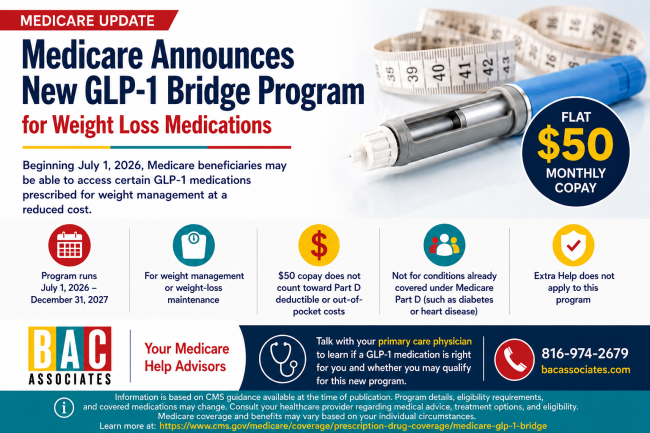
Medicare Announces New GLP-1 Bridge Program for Weight Loss Medications
Many Medicare beneficiaries have asked whether Medicare covers popular weight-management medications. Historically, Medicare has provided limited coverage for medications prescribed solely for weight loss, leaving many beneficiaries responsible for significant out-of-pocket costs.
That may soon change.
Beginning July 1, 2026, the Centers for Medicare & Medicaid Services (CMS) will launch the Medicare GLP-1 Bridge Program, a temporary demonstration program designed to provide eligible Medicare beneficiaries access to certain GLP-1 medications at a more affordable cost.
What Is the Medicare GLP-1 Bridge Program?
The program allows eligible Medicare beneficiaries to obtain certain GLP-1 medications prescribed for weight management through a special program outside of Medicare Part D.
Participants who qualify will pay a flat $50 monthly copay for covered medications through December 31, 2027.
Who May Qualify?
The program is intended for Medicare beneficiaries who are prescribed a GLP-1 medication for:
- Weight management
- Weight-loss maintenance
Eligibility requirements apply, and beneficiaries must meet CMS program guidelines.
Who May Not Qualify?
Individuals using GLP-1 medications for conditions already covered under Medicare prescription drug plans generally will continue receiving coverage through their Part D plan instead of the Bridge Program.
This may include beneficiaries using GLP-1 medications for:
- Type 2 diabetes
- Certain cardiovascular conditions
- Obstructive sleep apnea
- Certain liver disease indications
Important Things to Understand
While the $50 monthly copay may provide significant savings, the program operates differently than traditional Medicare prescription drug coverage.
The following are important considerations:
- The program operates outside of Medicare Part D.
- The $50 copay does not count toward your Part D deductible.
- The cost does not count toward your annual Medicare prescription out-of-pocket maximum.
- Extra Help (Low-Income Subsidy) benefits do not apply to prescriptions obtained through the program.
Why Is Medicare Offering This Program?
CMS created the Medicare GLP-1 Bridge Program to improve access to weight-management medications while gathering information that may help shape future Medicare coverage decisions.
As demand for GLP-1 medications continues to grow, this demonstration program may provide valuable insight into how these medications affect beneficiary health outcomes and healthcare costs.
Interested in a GLP-1 Medication?
If you believe a GLP-1 medication may be appropriate for you, start by speaking with your primary care physician or healthcare provider.
Your healthcare provider can evaluate your medical history, discuss treatment options, and determine whether a GLP-1 medication may be appropriate for your individual health needs. They can also help you understand whether you may qualify for programs designed to reduce the cost of these medications.
BAC Associates is available to help answer general Medicare coverage questions, but medical eligibility and treatment decisions should be made with your healthcare provider.
Learn More
For the most current information about the Medicare GLP-1 Bridge Program, including eligibility requirements, participating medications, and program updates, visit the official CMS webpage:
https://www.cms.gov/medicare/coverage/prescription-drug-coverage/medicare-glp-1-bridge
Because this is a new demonstration program, details may evolve over time. Always refer to CMS for the latest information and consult your healthcare provider regarding medical eligibility and treatment options.
Questions About Your Medicare Coverage?
If you have questions about your Medicare coverage or benefits, contact BAC Associates.
📞 816-974-2679
🌐 bacassociates.com
BAC Associates — Your Medicare Help Advisors
Disclaimer: Information is based on CMS guidance available at the time of publication. Program details, eligibility requirements, and covered medications may change. This article is for educational purposes only and should not be considered medical advice. Consult your physician or healthcare provider regarding medical advice, treatment options, and eligibility. Medicare coverage and benefits may vary based on your individual circumstances.